
Identify Critical Positions, Develop Successors & Ensure Continuity
Succession Planning
Map critical positions across your organization, nominate successors with priority rankings, assess readiness from ready-now to long-term potential, track competency gaps, assign mentors, and create development plans - all connected to performance data and individual development plans.
undefined
undefined
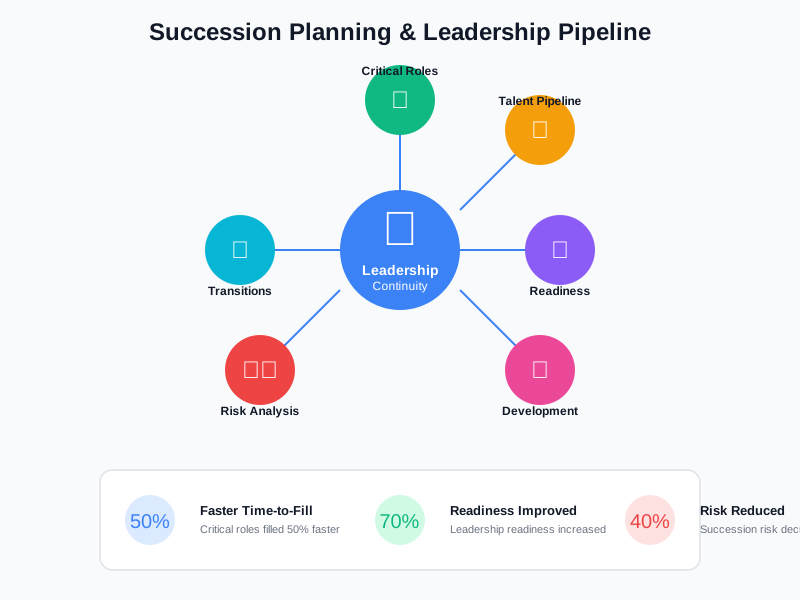
A Structured Pipeline from Critical Roles to Ready Successors
Noova Succession Planning provides a five-step workflow to build and maintain talent pipelines for your most important positions. Start by defining which positions are critical to the business. Nominate potential successors and assess their readiness. Track competency gaps and assign mentors to accelerate development. Create individual development plans tied to succession requirements. Monitor coverage and risk across the organization with a centralized analytics dashboard.
Five Management Levels
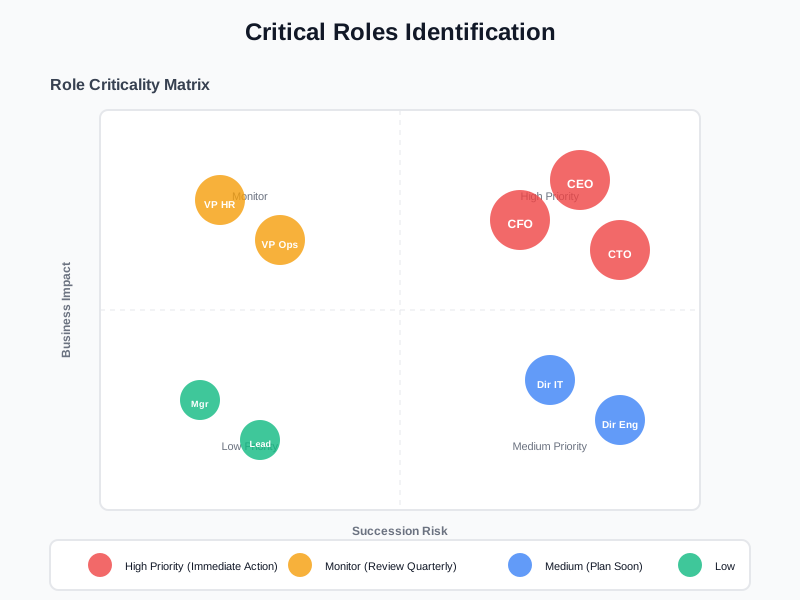
Classify critical positions across executive, senior, middle management, supervisor, and specialist levels. Assign criticality ratings - critical, important, or standard - to prioritize attention.
Four Readiness Levels
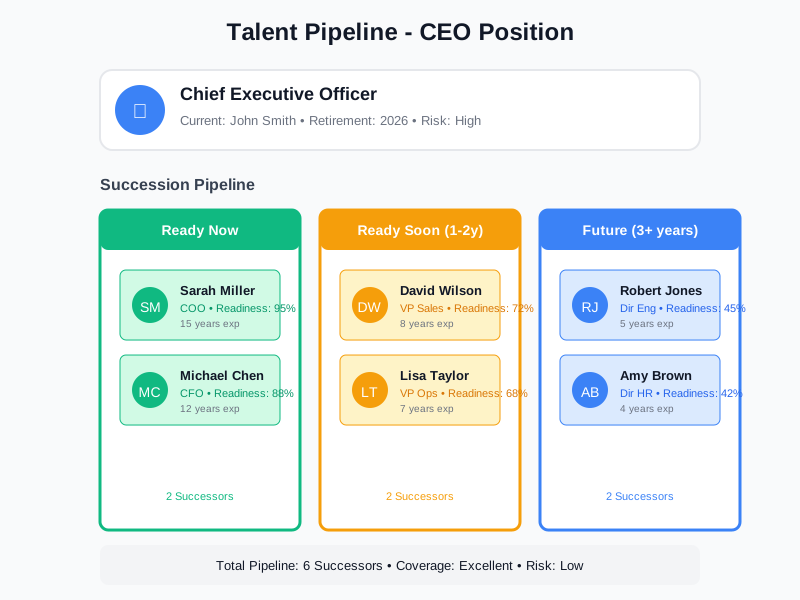
Assess each successor as ready now, ready in 1–2 years, ready in 3–5 years, or not ready. Combine the readiness level with a 0–100 score for granular tracking.
IDP Integration
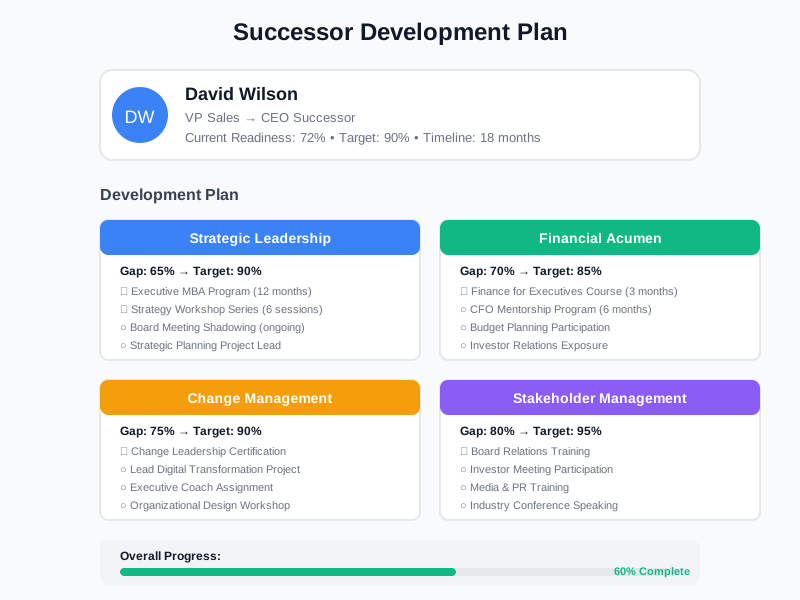
Create individual development plans directly from succession requirements. Development activities are targeted at closing the specific competency gaps identified for the successor's target position.
Configurable Review Cycles
Set up regular plan review cycles to reassess readiness, update successor rankings, and adjust development priorities as the organization evolves.
What Succession Planning Enables
Leadership Continuity
Maintain business continuity by knowing exactly who can step into critical roles when vacancies occur. Ready-now successors provide immediate coverage, while longer-term candidates are being developed.
Targeted Talent Development
Instead of generic training, develop successors with activities specifically designed to close the competency gaps required for their target positions. Mentors guide successors through the development process.
Organization-Wide Visibility
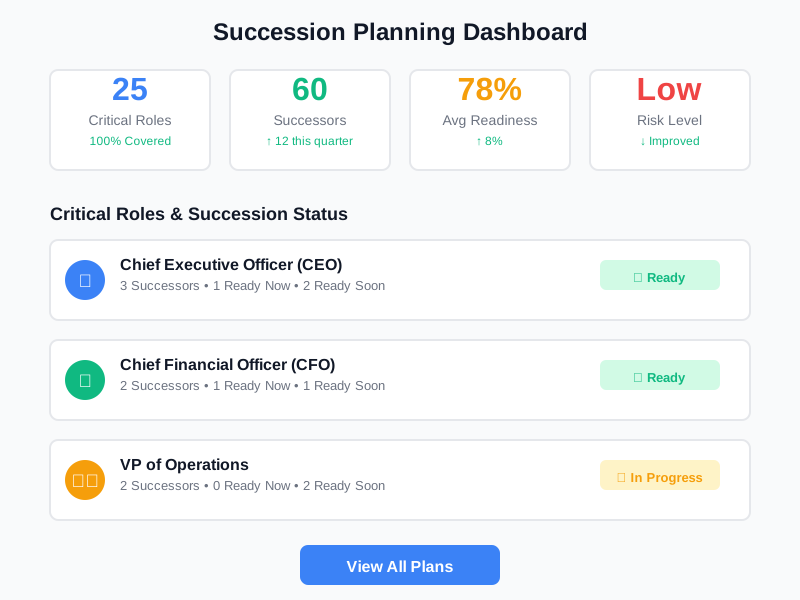
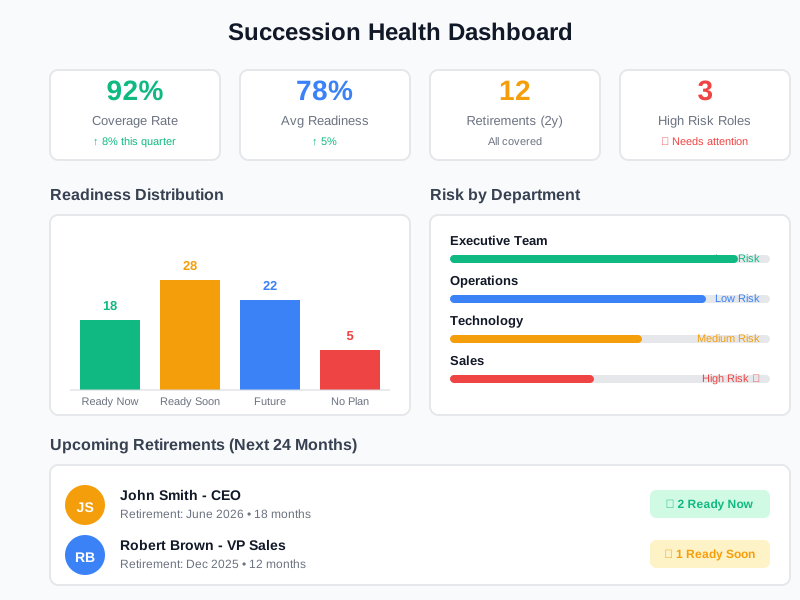
HR and leadership see the full succession picture - which positions are covered, which are at risk, how many successors are in the pipeline, and how readiness levels are changing over time.
Data-Connected Decisions
Succession data connects to performance reviews, competency assessments, and development plans. Decisions about successor readiness are based on actual performance data, not assumptions.
Who Uses Succession Planning
HR Leaders & Talent Teams
Design and manage succession plans, identify critical positions, assess successor readiness, and report on succession health to leadership.
Senior Leadership
Review succession readiness for the positions that matter most to business continuity and strategic growth.
Department Managers
Identify critical positions within their teams, nominate potential successors, and support successor development through mentoring and coaching.
Identified Successors
Access their development plans, understand target competency requirements, and work with mentors to close gaps and build readiness.
How Organizations Use Succession Planning
Building a Pipeline for Senior Leadership Positions
An organization needs to ensure continuity for its senior leadership roles. HR wants to identify which positions are most critical, nominate potential successors, and create development paths for each candidate.
- Created a succession plan scoped to the entire organization
- Identified critical positions at executive and senior management levels with criticality ratings
- Nominated 2–3 successors per position with priority rankings
- Assessed readiness: some rated as ready now, others as ready in 1–2 years
- Competency gaps tracked for each successor against the target position requirements
- Mentors assigned to accelerate development for high-priority successors
- Individual development plans created directly from succession gap analysis
Department-Level Succession for Key Specialist Roles
A department has several specialist roles that are difficult to fill externally. The department head wants to develop internal talent to ensure knowledge continuity and reduce dependency on external hiring.
- Created a department-scoped succession plan for specialist-level critical positions
- Identified critical positions at specialist and supervisor levels
- Nominated internal candidates with readiness assessments and 0–100 scores
- Competency gap analysis highlighted specific technical skills needing development
- Development plans included job shadowing, training courses, and project-based learning
- Quarterly review cycles set to reassess readiness and update successor rankings
Organization-Wide Succession Risk Monitoring
Leadership wants a clear view of succession health across all departments. They need to know which critical positions lack successors and where readiness gaps are most severe.
- Analytics dashboard showed succession coverage by department and position level
- Risk analysis identified positions with no nominated successors
- Pipeline report showed the distribution of readiness levels across all successors
- Coverage gaps prioritized for immediate action based on criticality ratings
- Regular plan reviews configured to keep succession data current
Using Succession Planning Step by Step
1
Create a Succession Plan & Identify Critical Positions
Start by creating a succession plan - scoped to the organization, a department, or a division. Then identify the critical positions within that scope. Classify each position by management level (executive, senior, middle, supervisor, specialist) and criticality (critical, important, standard).
2
Nominate Successors & Assess Readiness
For each critical position, nominate potential successors. Rank them by priority and assess their readiness - ready now, ready in 1–2 years, ready in 3–5 years, or not ready. Assign a readiness score from 0 to 100 and document competency gaps against the position requirements.
3
Assign Mentors & Create Development Plans
Assign mentors to guide successors through their preparation. Create individual development plans directly from the succession requirements - the system pulls in the competency gaps so development activities can be targeted precisely.
4
Monitor Coverage & Review Regularly
Use the analytics dashboard to monitor succession coverage, pipeline health, and risk across the organization. Set up regular plan review cycles to reassess readiness, update rankings, and adjust development priorities as successors grow and the organization changes.
Complete Feature Breakdown
Critical Position Management
Identify and classify the positions most important to business continuity and strategic success.
Successor Nomination & Ranking
Build talent pipelines by nominating potential successors and ranking them by priority.
Readiness Assessment
Evaluate how prepared each successor is to step into the target role.
Mentor Assignment & Development
Accelerate successor readiness by connecting them with mentors and targeted development plans.
Plan Structure & Workflow
Organize succession plans with a structured five-step workflow and configurable scope.
Analytics & Risk Monitoring
Monitor succession health and identify coverage gaps with a centralized dashboard.
Frequently Asked Questions
Common questions about Succession Planning
Ready to Build Your Leadership Pipeline?
Identify critical positions, develop successors with targeted plans, and monitor succession coverage - all connected to performance data and individual development.


